Monday, December 8, 2025

CALL THE CHIROPACTER... i'm back

 Well Well Well... Look what we have here. You thought you could get rid of me, huh? Well, just as the phoenix rises from the ashes, I, too, rise from said ashes. I've missed this. I've missed... us. This just feels right. I have a lot to update you on, so let's make like a Zach London and write. 

How it feels to genuinely open Blogger and post


One of the first big projects in A Level (this just sounds British) was to watch some documentaries to prep for eventually creating our own. Let's go over them, shall we? 


First, we watched a couple of episodes. 
from a docuseries called "ABSTRACT."
“Abstract” ultimately aims to show the creative process in its many forms. It attempts to document the different outlets people use to be expressive and espouse their ideals or thoughts in an artistic form. The series is anthological, so it doesn’t have to be watched in sequential order. This allows the viewer to select a specific episode that interests them instead of slogging through content they may not find enjoyable. Stylistically, some of the choices I found interesting were that the opening graphics package is topic-centered, relating to the specific subject of the episode. For example, in the “Art of Design” episode, the credits and opening intro are shown in apps because of the subject's app design background. A lot of swiping and scrolling was used as it is reminiscent of the motions people are familiar with taking whilst on apps covered in the episode. Another aspect of the series I enjoyed fell on the marketing side. A common theme on the “Abstract” Instagram account is posting stills or short clips from each episode with a quote from the subject as a caption. This strategy can be seen in a post-marketing episode covering the life of Cas Holman. A picture of him jumping on a trampoline is paired with the quote “All humans play, because we have to”. The trampoline picture develops his childlike nature, while the quote explains his love for toymaking.
Cas Holman Jumps on a trampoline-Abstract Instagram.

This style allows a passive scroller to immediately get hooked by the vibe the artist creates through their work, leaving them wanting more. This makes them navigate to Netflix to watch the rest of their story.


The next doc we watched was called "American Promise."


American Promise follows the lives of two black boys as they grow up attending a predominantly white, wealthy school in New York. It also features my goat, Idris. And I don't really care what anyone says; Idris is so much more likable than Seun.
I learned a new big boy word when analyzing this doc: "Verite." It's French for something stupid, probably (ok, it's actually a style of filmmaking focusing on realism, but I need to keep the British lot happy with some French hate). “American Promise” exemplifies the verité style of filmmaking it aims to achieve. Through personal interviews, specifically the scene where Seun discusses his brother’s passing and the effect it’s had on him, it accomplishes this goal. Seun comes across as blunt, honest, and a bit weary of even doing the interview. It’s clear not much is on his mind besides his brother's passing, and the prospect of the interview doesn’t seem to interest him. Seun doesn’t look at the interviewer much, further showing his disinterest in the documentary. The documentary uses indirect interviews to tell its story. This allows for the interviewers and behind-the-scenes production crews to be entirely absent from the narrative world. This makes it so the viewer only gets a look at the story of the kids and not any of the production process, allowing them to be fully enthralled within Idris and Seun’s world. Because the interviewer is never heard, the kids tell their own stories with what seems like a lack of prompting from any outside sources. This makes it seem as though they are narrating their own lives and not a part of an active documentary, enhancing the air of realism it has. 


The next documentary we watched was "Exit through the Gift Shop."


This piece was created by niche artist Banksy. “Exit through the Gift Shop” attempts to showcase the tumultuous, underground world of street art. From the perspective of said artist Banksy, the piece illustrates a uniquely verite style of filmmaking, using footage very few would have access to. The interviews with some of the craft's biggest names further elevate the piece, giving it an air of authenticity and credibility on the topic. Guetta, a fairly peculiar man attempting to scam his way into the art world, sees himself as someone of deep creative intelligence (much to Banksy’s dismay), and the music, editing style, and shot angles all work to develop that thought. The music, especially in the earlier stages of the doc (when Guetta was filming other street art), featured a grunge, angsty sound reflective of Guetta’s rebellious nature. Editing-wise, fast-paced b-roll clips and yellowish hues further this angsty feel of Guetta’s early work of running around filming street art. Shot angles like close-ups and extreme wide shots (that Guetta describes as him going above and beyond for) further showcase the dedication and almost exclusive access Guetta had for the art he showcased, and the surface-level depth he desired others to see him as. Throughout the Documentary, Banksy shifts how Guetta is perceived through a variety of technical elements. At first, Guetta’s footage is shaky, handheld, and very yellow (a by-product of the streets he filmed on). This is meant to portray Guetta as an amateur, not yet professionally known, and rebelling against societal norms. Banksy uses fast-paced editing and angsty music to further this theme. The interviews from a variety of artists describe Guetta, at worst, as a wacky guy with weird taste, still admiring his desire to document. Banksy talks of him as a friend, and a trustworthy one at that. This is designed to feel like a hero story, documenting Guetta’s rise to fame and notoriety. However, as Guetta’s ego grows, Banksy lets shots linger for longer, portraying Guetta for the shallow, egotistical man he turned out to be.

                                                           Guetta (70% accuracy)

The music is now much classier, reflecting Guetta’s desire to be perceived as someone of high stature. Banksy stops including other artists' interviews, instead only using his own and Guetta’s to get as close to a true account of the change as possible. These stylistic changes showcase how Guetta fell from an artist to a shallow critique of one. 

Next, we watched some op docs from the New York Times.


I made this myself can you tell


Ok, so I started by watching a really weird doc called "Roaches Lullaby."


This short documentary follows the sometimes humorous ways New Yorkers deal with roach problems in their homes. From smacking to spraying, the doc looks at the various techniques that everyday people use to address problems in their communities.  This sub-6-minute doc is narratively pushed by indirect interviews. The interview shots are handheld, often zooming in and out of the subject's faces. This builds the narrative of an amateur picking up a camera to document a problem in their community. The subjects are often placed at the more forward of the left or right thirds, not sitting still, and looking far off to the side. This furthers the idea of a person with little to no documentary experience being the one behind the story.

B-roll-wise, it's evident through the subject's comments that the b-roll was staged. One subject states how the roaches weren't "performing" for the crew, pointing to the crew asking for the subjects to kill roaches for b-roll. The b-roll and interviews mesh into one, with the subjects talking about their actions during the b-roll of them killing roaches. The b-roll shots are often close-ups, speaking to the size of the likely working-class homes the subjects live in. The ending of the song is a unique blend of humor and coping, giving the audience an even further look into the psyche of the residents dealing with the roach problem. These choices coalesce to form a documentary that portrays an accurate representation of New Yorkers dealing with an albeit disgusting problem in their community. I enjoyed the documentary for what it was. The personalities of the subjects came across the screen very well, thanks to their interviews and the way they were framed/shot in such a pedestrian manner. The close-up, personal b-roll really made me feel like I had to deal with this roach problem, too. For all the amateur aspects of this documentary, I loved it for its clear personality and groundedness.


The second op-doc I watched was called "Christmas Every Day."


This short documentary follows 2 sisters who, with a push from their parents, are attempting to gain social media stardom through dancing and vlogs, as well as contrasting this life with the desire to lead a more traditional life as kids.  The documentary is pushed narratively by indirect interviews. Every shot in this doc is shot with a tripod, creating an almost hauntingly still picture painted by the content on screen. The shots are also often medium or wide, along being longer takes. This Likely speaks to the small production crew of the documentary, with only one person behind the camera. The shots are likely set up this way to give the audience the most visual information without risk of the subjects stepping out of frame. The stillness also contrasts with the active nature of the children, pitting their child-like wonderment and rambunctiousness with the often soul-crushing nature of the social media sphere.

The girls' outfits are representative of their actions. When the girls are making videos, their outfits often match those of a young-20-something, with elaborate sweaters, jeans, and hats. When the girls are being interviewed, they sport pajamas much more representative of what a 10-year-old would wear. 6-roll often features the girls filming videos or getting ready, again utilizing this still, wider shot strategy that makes the audience feel like a fly on the wall of the warped reality the girls are living in. Often, social media videos can be heard from the subjects' phones. This serves as a creative vessel for the documentarian to illustrate the building of stressors. The volume of the critiques, advice, and commentary the subjects are receiving in a short amount of time acts as a manifestation of the pressure put on the girls to succeed. These choices work together to create a documentary that showcases the almost backwards world of child influencers and the pressure put on them by their parents and society as a whole to succeed. This doc served as a haunting Look into a world I so rarely see. I enjoyed the stillness the piece provides. The tripod shots offered a very pleasing viewing experience, and the lack of traditional interview shots was a nice change of pace. The medium/wide shot b-roll, along with the auditory cues of social media videos, enthralled me in the story of the girls being pressured to perform. This doc provided a unique view into a world not properly covered, and the pleasing viewing experience offered an easy, digestible way for me to learn the info.


 Ok doc discussion over, my doc up next


d


Tuesday, March 25, 2025

a proper english goodbye

something something cherish the present something something good times lasting

thanks to Renn, Emi, and Nico for the help on production, and thanks to Gus for the help on the 1st CCR

You can watch my film opening here- Zachary London 

You can watch my first CCR here- Zachary Paris

And you can watch my second CCR here- Zachary Berlin (watch until the very end for something cool)


And for the final time this year, goodbye... I've been Zachary London


Sunday, March 23, 2025

well, in case i dont see ya

 I guess this is it, Cambridge. 

After months of work, planning, fights, triumphs, failures, and learning experiences, here I am sitting in my bed about to finish this project. 

This project has turned into something special to me. I've discovered aspects of myself  I didn't know I had. This production allowed me to explore and grow my directing, editing, and writing muscles. It's helped me outside just this class, as I feel more prepared to write in AP Lang and analyze in AP US History. 

Over the past 3 months,  I've become an overall better person because of the opportunity this project has given me. I've become close with some amazing people and developed confidence in my work. 


Squad                                                                         and don't forget my goated chem partner emi

Going into A level next year seems daunting, but I know that, because of the foundation I have with this project, it'll be a task I can handle. 


Friday, March 21, 2025

what nietzche failed to consider is the impact of whimsy on the human spirit

 i wike 2 edit 


i wuv editing 


My editing process for my first CCR was pretty easy. Aside from the bit of audio mixing and shifting I did, editing on Adobe Audition was a breeze. 

Here's a look at the settings for my audio

Timeline of the first CCR


It took me about 2 hours to get through matching music and sound effects, and then I was done. It was an overall simple edit, juxtaposed to the marathon of my second CCR.

me after the 2nd ccr
I've been editing throughout the week, getting the portions of the video I filmed edited so the load would be easier on me. Sufficed to say when I finished editing the last scene tonight it felt like I just slayed a giant. The editing in it of itself wasn't the difficult part, rather the exhaustion I felt knowing this was my last act for this project was overwhelming. I colored a bit, but I wanted the video to feel pretty natural. I did a pretty cool sound design on the project, which I think really helped it to be more engaging. That's really all I have to say it felt like I was on autopilot editing this. 
Timeline for the second CCR

I'm incredibly happy with how this project turned out, and I can't wait for you guys to see it.


Thursday, March 20, 2025

when u find out your goat still has it ❤️

 I got the band back together

I am not washed

I am goated


Like I said, my first CCR is a continuation of a podcast series I started with my friend Gus. 

Say "hi gus"

To record audio, we both used holly land mics we had. Because we recorded in separate locations (we're on Spring Break) I had to touch up his audio in Adobe Audition, but that's a later story. My script followed a similar outline when we made our Podcast at the University of Miami. However, this time I had a large monologue instead of our usual back and forth. You can take a look at the script here. This CCR wasn't difficult to produce because I've done the process so many times. I was able to record and edit the entire thing in about a day. The second CCR was a different story.

For CCR numero dos, I made a short film. Now you may ask ''Zach, do you hate yourself" "Zach, do you want to go insane" or "Zach, do you ever get a tingling feeling that nothing will ever be the same and you can only reflect on your past, never living it again" and the answer to all those questions is a definite yes. 
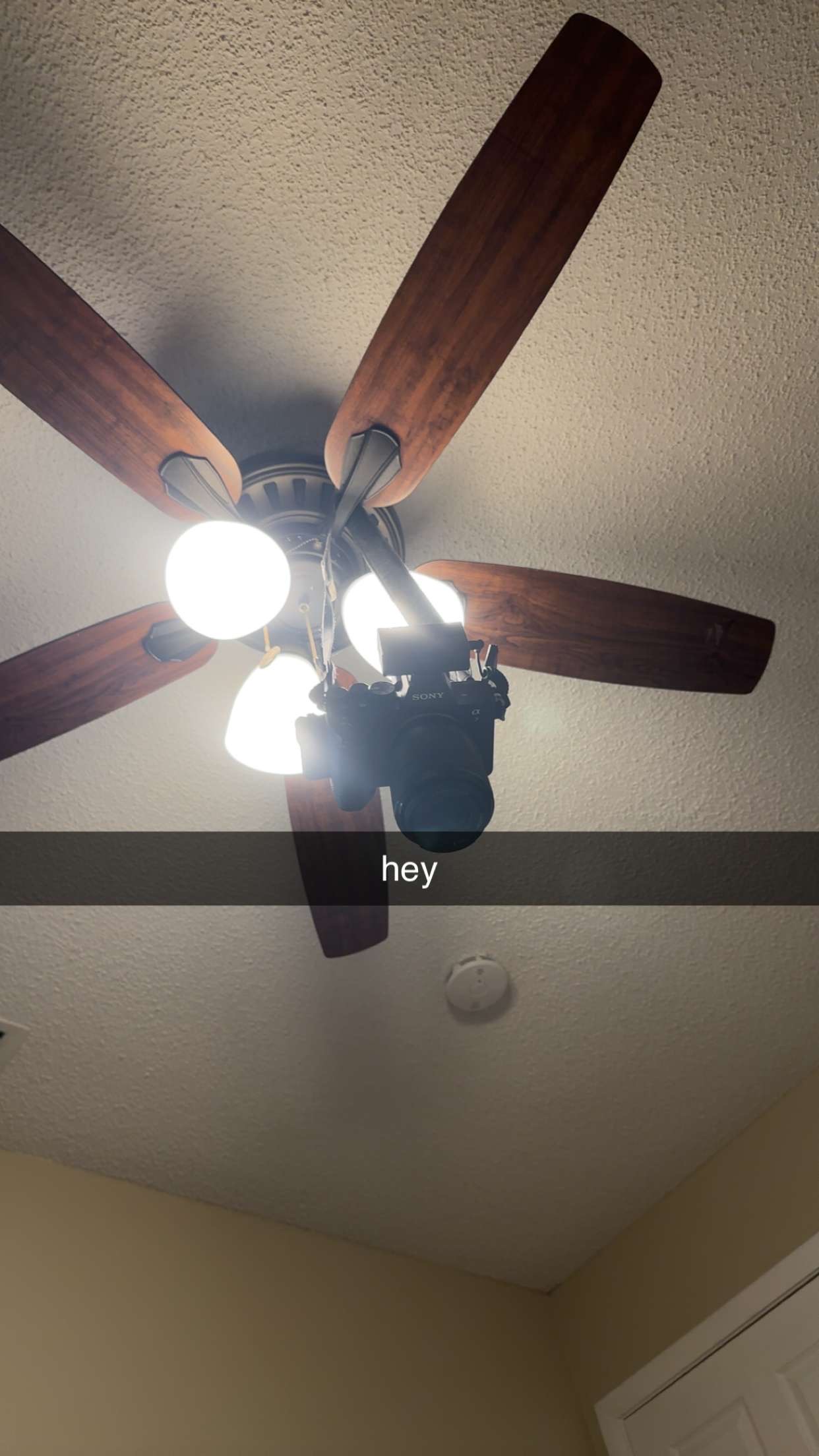
This took me 4 days to do, and no, I did not blog throughout because I have better things (watching March Madness) to do because I am a respectable and classy young man. I've been running around my house and neighborhood filming, and while I will spare you the rousing details of production, I will not, however, spare you from looking at some pics of my shoot. 
 These are the only pics I took 

                        camera on da ceiling 🔥🔥🗣️🗣️‼️


Still from the CCR

I used my hollyland mics for audio, and my Sony A74 to film. You can read the script on my blog, I wouldn't say it's verbatim what I said in the video, but it gets the point across. I made use of my old tiktok fame from transition videos I made when I was 13 to change between scenes. It gave the video a cohesive feel that helps with pacing. I'm really happy with how filming turned out. Editing 🔜


Sunday, March 16, 2025

Give me a C! (C!) Give me another C! (C!) Give me an R! (R!) What's that spell? im not finishing the rest

 We've been through this spiel before so let's just cut to the chase. I have to answer this question: 
How did you integrate technologies – software, hardware, and online – in this project?

The project was edited on Adobe Premiere Pro and After Effects, both on my and Renn's computers. My computer was used for the remaining line edit and all the color grading done in Premiere and After Effects, while Renn did the graphics of the credits on his computer with After Effects and the Adobe Suit's font's app.

                                                        Totally not a staged shot of me looking at premiere

We filmed on my super awesome very nice Sony A74, and because my Tamron 35mm lens is broken :(, we used a mount converter I had to attach a cannon 50mm lens on to the camera. I set the Kelvin (White balance or warmth) on my camera to a lower number to get a warmer look that we found was common in Western films. 


                                                                            Renn with da camera


We also used my Hollyland mics to get the nat pops we have of Emi digging.

We researched a ton to find the right style for our projects, using the internet's wealth of knowledge to our full advantage. I also used my fav audio website bulletproofbear.com to find the music for our film, and pixabay.com for other sound effects. 
 
Of course, I couldn't have done any of this (and you wouldn't be reading this) without blogger. I've put everything I've had into my blog, from my thoughts to my plans, it's been my bible for everything I do. So thank you blogger, and thank you reader for... reading. You did that. Good job.


Saturday, March 15, 2025

smh you can't even CC in this country anymore, probably because of R

 This is my first Saturday off in a while, so why not blog. 

For my 3rd and 4th questions, I'm going to do a cool little investigative short film. For the third question, I have to answer the following: 

How did your production skills develop throughout this project?


How did they? Hmmmm. I'm already well-versed in a few aspects of production, so let's try to get to there bottom of it. 


*Shuffling through papers* 


Found it- Time management


I've learned how to use my time wisely on this production more than any other I've been on. It's requires planning, teamwork, cooperation, and constant attention placed on every detail of the process. Another thing I've improved on is color grading. I wouldn't consider myself a miracle worker when it comes to color grading like some of my friends are, but I wouldn't call my work bad or anything. The Western genre provided an opportunity for me to really stretch my coloring muscles, as we wanted to get the look just right. 


(about) the color we were going for. 


Color we got


Shooting outside provided a unique challenge for me during coloring. Matching the clips to one another after the sun had hidden behind some clouds in a few shots, or it was a bit brighter in other shots was hell. It took a long time to get the color cohesive across the edit. 


This project also gave me the chance to take a second and think about the why. Why am I doing this? Why is Charlotte wearing a hat, why is she limping, why is she doing anything at all. This production and class as a whole has given me the outlet to think, and it's helped a lot in my skills outside the classroom.


Mise-en-scene was another big thing I learned the importance of. From how our character moves to her costuming, a greater focus on what we showed on screen elevated our production to another level.


But the biggest thing I learned is that any genre can be interesting. I hadn't watched many Westerns before this project, but now it's become a genre I respect and enjoy. It's a relic of old movie-making, and while the techniques may be from the past, it can teach a lot about how we can improve in the future.


About Me

My photo
Hey, I'm Zachary London, an aspiring filmmaker, sports journalist, political journalist, or anything I can do myself. I love the rush creativity gives me, and anything I can do to further my creative process interest me. Follow me as I grow in my creative journey, strengthening my skills, and learning as I go.